








An organization's data is a vital corporate asset. So how do you determine how much security is enough to adequately protect that data?
Editor's Note: This is an introduction to the white paper "Protecting Your Data: How Much Security Is Enough?" available for free from the MC White Paper Center.
The answer to how much security is enough depends on the type of data, its value to your organization, and your organization's policy requirements. If the data stored on your systems is governed by a law or regulation (such as HIPAA or PCI DSS), then those laws and regulations may dictate how much is enough—at least to be in compliance with those laws and regulations. However, your organization may decide that those requirements are not sufficient to adequately secure the data. In this case, you may add additional requirements for securing the data.
In ensuring compliance with SOX, for example, you will be implementing policies that are designed to ensure that the financial information is accurate and can be relied on. At a minimum, access control settings of the databases containing financial information will enforce the appropriate role-based access.
On the surface, this may seem like an easy and obvious task. Provide application access only to the to the users of that application and customize—by role—what tasks users are allowed to perform within the application. That's one step. The other step is to make sure that the access rights to the database where the data is stored are set properly. Many application providers and security administrators ignore this step, leaving data directly accessible via ODBC or FTP connections by users without a business need to access the data. Depending on the access control setting, these users may be able to just read the data. But some application providers and developers will leave the access at a level that allows users to change data or delete records.
The answer to the how-much question for data that isn't under the control of a law or regulation is based solely on the value of the data to your organization. This is the consideration that most organizations forget to make. While many organizations consider the damage to their reputation if private data were lost or stolen, most fail to consider the damage that would be caused by losing non-regulated data. For example, many fail to consider what would happen if their pricing or supplier information got into the hands of their competitors or if a non-profit's donor list were published on the Internet.
Numerous benefits are realized by answering the question "How much security is enough?" and then securing your organization's data appropriately. Be sure your discussion includes the following:
- Compliance with regulatory requirements
- Privacy and confidentiality of data
- Integrity of data
- Availability of data
Editor's Note: For a more in-depth discussion on this topic, request the white paper "Protecting Your Data: How Much Security Is Enough?" available free from the MC White Paper Center.

Carol Woodbury is IBM i Security SME and Senior Advisor to Kisco Systems, a firm focused on providing IBM i security solutions. Carol has over 30 years’ experience with IBM i security, starting her career as Security Team Leader and Chief Engineering Manager for iSeries Security at IBM in Rochester, MN. Since leaving IBM, she has co-founded two companies: SkyView Partners and DXR Security. Her practical experience and her intimate knowledge of the system combine for a unique viewpoint and experience level that cannot be matched.
Carol is known worldwide as an author and award-winning speaker on security technology, specializing in IBM i security topics. She has written seven books on IBM i security, including her two current books, IBM i Security Administration and Compliance, 3rd Edition and Mastering IBM i Security, A Modern, Step-by-Step Approach. Carol has been named an IBM Champion since 2018 and holds her CISSP and CRISC security certifications.
MC Press books written by Carol Woodbury available now on the MC Press Bookstore.
 |
||
 |
|
IBM i Security Administration and Compliance: Third Edition Don't miss the newest edition by the industry’s #1 IBM i security expert. List Price $71.95 Now On Sale
|
 |
|
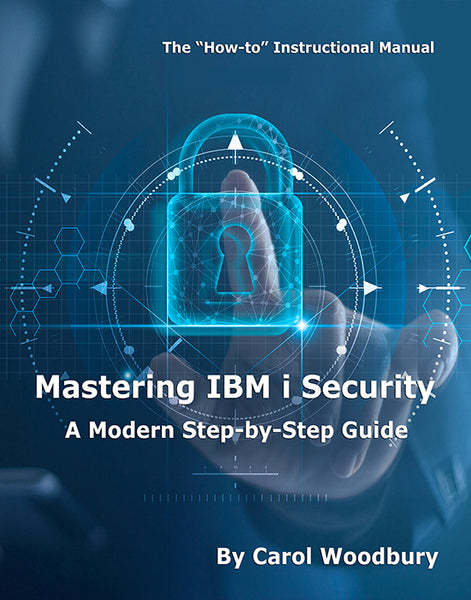
Mastering IBM i Security Get the must-have guide by the industry’s #1 security authority. List Price $49.95 Now On Sale
|

 Business users want new applications now. Market and regulatory pressures require faster application updates and delivery into production. Your IBM i developers may be approaching retirement, and you see no sure way to fill their positions with experienced developers. In addition, you may be caught between maintaining your existing applications and the uncertainty of moving to something new.
 IT managers hoping to find new IBM i talent are discovering that the pool of experienced RPG programmers and operators or administrators with intimate knowledge of the operating system and the applications that run on it is small. This begs the question: How will you manage the platform that supports such a big part of your business? This guide offers strategies and software suggestions to help you plan IT staffing and resources and smooth the transition after your AS/400 talent retires. Read on to learn:
LATEST COMMENTS
MC Press Online