


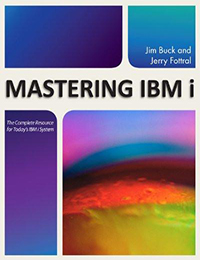






API expert Bruce Vining delivers the only comprehensive guide to APIs.
Although I have rarely had problems using the C-style APIs from RPG, for some strange reason, the system APIs have always intimidated me. Perhaps it is the arcane terminology that IBM uses to describe them. Perhaps it is the lack of good RPG examples in the manuals. Or perhaps I'm simply API-phobic. Whatever the reason, I have often turned to the experts when I needed to use an API. During my time with IBM, I quickly learned that the expert was Bruce Vining. Bruce was not only involved in the design and implementation of many of the APIs, he was also one of the few in the Rochester Lab who was RPG- and COBOL-literate and could therefore "translate" the arcane terminology of the documentation into something that we mere humans could understand.
Bruce's knowledge of APIs is unparalleled, and over the years he has added to that knowledge the ability to communicate it effectively to others. In recent years, Bruce has authored a number of articles for various publications, and we were thrilled when he agreed to become a featured speaker at our RPG and DB2 Summit conferences. As a result of these activities, together with his contributions to various Internet lists, many more have been able to benefit from Bruce's knowledge and teaching skills. But it is only with the publication of this book that his expertise becomes available to an even wider audience, as and when they need it.
It is difficult to imagine a more comprehensive guide to APIs than that contained between these covers. From list APIs, to Telnet, to encryption, Bruce covers them all and does so in an informative and entertaining fashion. Not content simply to detail their naked operation, Bruce also demonstrates the usage of these APIs as the foundations for a number of utility programs that most shops will soon spot a use for in their daily operations. Even better, the examples are terrific demonstrations of the power of the RPG IV language. If you were to purchase this book for no other reason than to study the examples, you would get excellent value for your money. Hopefully, some of the folks involved in producing IBM documentation will read this book and take the hint!
COBOL users are not left out either; Bruce provides COBOL versions of all of the code.
At well over 700 pages, this is indeed a weighty tome, but unlike so many others, there's no "fat" here, just solid content that will satisfy your hunger for knowledge.
One last comment: This is labeled as a "second edition," but it really is a completely new book. Those of you who have the original in your collection should treat this not as a revision but as "part 2."
If you have any interest in making your AS/400, System i, i Series, i5, or whatever you want to call it really sing, then buy this book. You won't regret it!

 Business users want new applications now. Market and regulatory pressures require faster application updates and delivery into production. Your IBM i developers may be approaching retirement, and you see no sure way to fill their positions with experienced developers. In addition, you may be caught between maintaining your existing applications and the uncertainty of moving to something new.
 IT managers hoping to find new IBM i talent are discovering that the pool of experienced RPG programmers and operators or administrators with intimate knowledge of the operating system and the applications that run on it is small. This begs the question: How will you manage the platform that supports such a big part of your business? This guide offers strategies and software suggestions to help you plan IT staffing and resources and smooth the transition after your AS/400 talent retires. Read on to learn:
LATEST COMMENTS
MC Press Online